
Why Did My Heater Stop Working?
By Sarah Walazek, TUTCO SureHeat Engineer
One of the more common calls I get starts with some version of: “We installed the heater, turned it on, and it failed immediately.” Most of the time, the customer assumes the heater itself was defective. But after looking at the application, reviewing the setup, and sometimes analyzing the returned heater, the root cause is usually something else entirely.
The reality is that industrial electric heaters are extremely reliable when they’re applied correctly. In most cases, failures come down to operating conditions, airflow, power control, or startup procedures. The good news is that nearly all of these failures are preventable once you understand what causes them.

When failed heaters come back to us for evaluation, there are a few patterns we see over and over again. Lately, the biggest issue has been improper ramp-up, followed closely by low airflow and temperature overshoot. Interestingly, those three problems are often connected.
The Fastest Way to Destroy a Heater: Too Much Power, Too Quickly
One of the biggest misconceptions people have is how quickly these heaters respond. Customers are often used to slower heating systems, so they’ll apply full power immediately and expect the heater to “work up” to temperature gradually. But high-performance process heaters don’t behave that way. They heat extremely fast.
If the heater is ramped up too aggressively, the element temperature can rise faster than the control system can react. That creates overshoot conditions where the heater exceeds its intended operating temperature almost instantly. In some cases, customers think the heater never worked at all because it failed so quickly.
A simple analogy I use is installing the wrong voltage light bulb in a fixture. You flip the switch, it flashes bright for a split second, and then it’s gone. The same thing can happen with a heater if too much voltage or power is applied too quickly. That’s why proper ramp rates matter.
Each heater has recommended ramp-up guidelines based on airflow and target temperature. We provide charts and technical bulletins that outline safe ramp rates and startup recommendations to help customers avoid this exact problem. Following those recommendations is one of the easiest ways to extend heater life and prevent immediate failures.
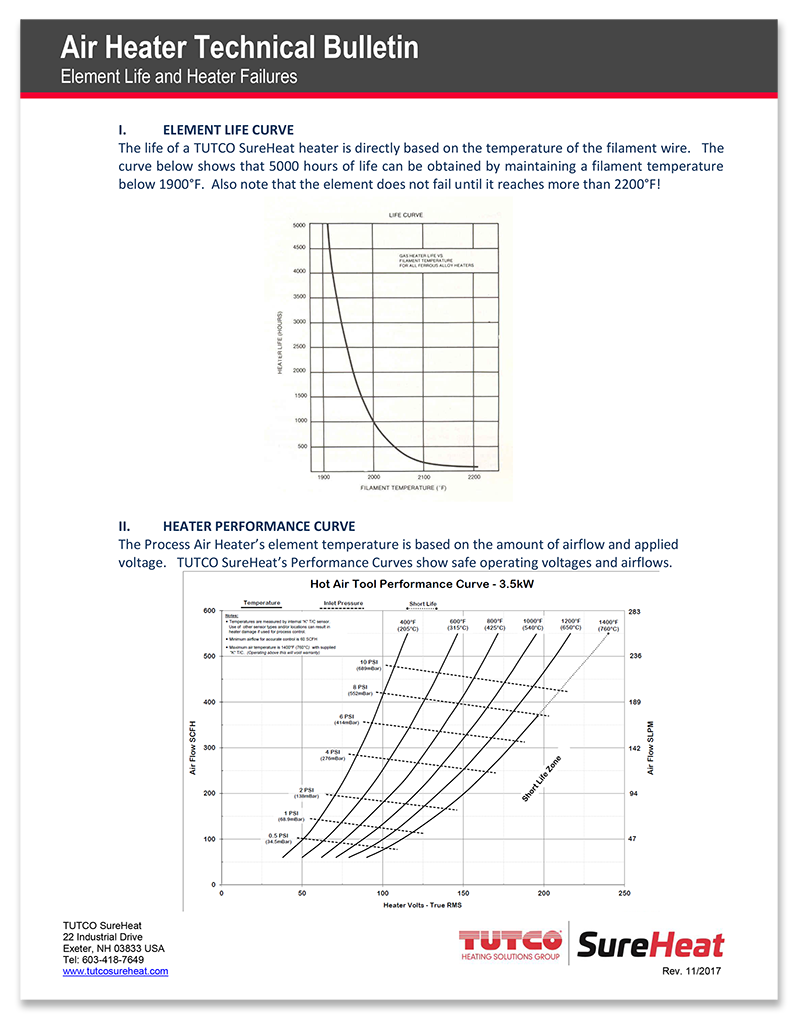
Low Airflow Is More Dangerous Than Most People Realize
The next major failure mode we see is low airflow. Most people understand that heaters need airflow, but they often underestimate how critical that airflow really is. A heater is designed so moving air carries heat away from the element and across the thermocouples. If airflow drops too low, the heated air essentially stagnates inside the heater. Instead of moving through the system, it sits there and creates what we often call an “oven effect.”
At that point, the thermocouple may not even see the true temperature because the airflow isn’t carrying the heat properly across the sensor. The element temperature continues rising internally until the heater eventually burns itself out. When we inspect these failures, the damage is usually obvious. The elements can melt, fold in on themselves, or arc internally from excessive temperatures.
What surprises some customers is that low airflow isn’t always caused by the blower itself. Restrictive nozzles, clogged filters, back pressure, dirty compressor systems, or poor maintenance practices can all reduce airflow enough to create problems. That’s why we strongly recommend using a flow switch or flow sensor whenever possible.
If airflow drops below a safe threshold, the system can automatically shut power off to the heater before damage occurs. This is one of the areas where properly designed control panels become extremely valuable. A flow switch tied into the control logic can create an “OK to run” condition that helps protect both the heater and the process.
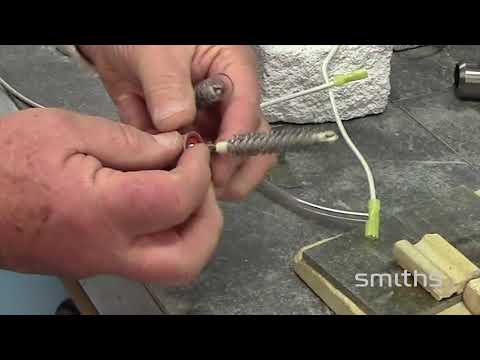
Cheap Controls Often Create Expensive Problems
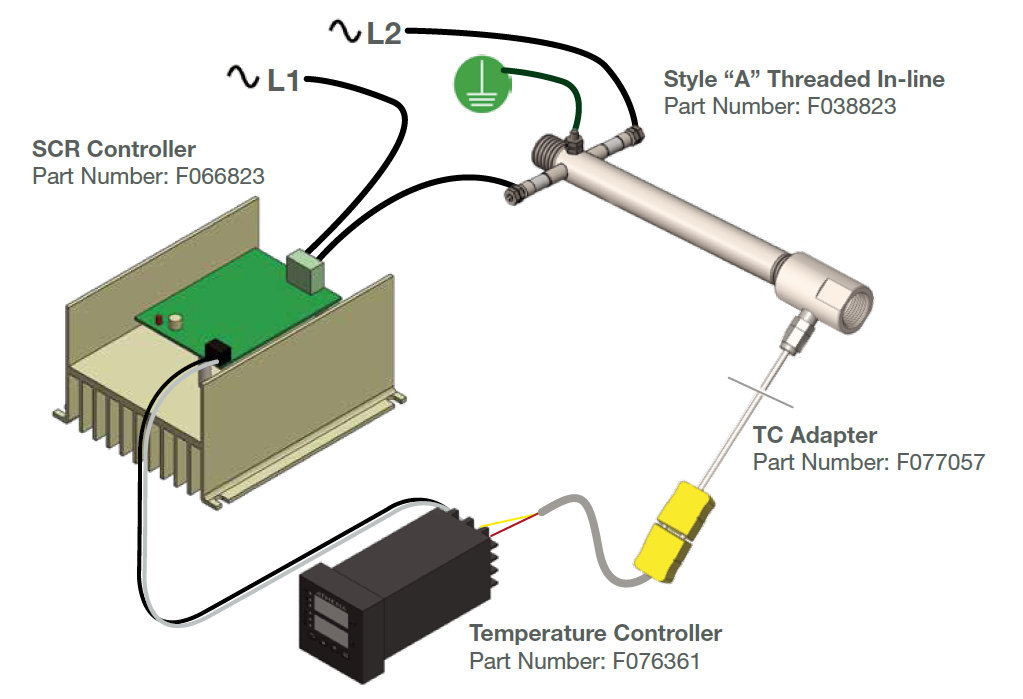 Another issue we encounter frequently is improper power control.
Customers sometimes try to build their own control systems or use inexpensive SCRs and relays that simply aren’t fast enough for the heater response time. The heater itself reacts almost instantly, but if the control system cycles too slowly, the heater continues receiving power longer than intended. By the time the controller reacts, the temperature has already overshot significantly.
This creates unstable operation where temperatures swing well beyond the setpoint instead of staying controlled and consistent. For our heaters, we recommend SCR cycle times of 200 milliseconds or faster. The SCR or SSR also needs to react quickly enough to regulate voltage accurately as process conditions change.
With properly designed controls, temperatures can remain extremely stable—often within just a degree or two of setpoint. With slower or poorly matched controls, the heater can continuously overshoot and stress the element. In many cases, the heater itself isn’t the problem at all. The control strategy is.
Built-In Safety Features Help — But They’re Not Magic
One thing that helps protect many of our heaters is the use of multiple thermocouples.
For example, the MAX and JET heaters include two thermocouples. One is positioned near the inlet and helps detect low or no airflow conditions. The second monitors outlet temperature to prevent overheating during normal operation.
These features add an extra layer of protection, but they still depend on the heater being installed and operated correctly. If airflow is severely restricted or the controls are configured improperly, even built-in protection systems can eventually be overwhelmed.
That’s why following startup procedures and installation guidelines is so important.
Sometimes the Problem Is Installation
Not every failure happens during operation. Some occur before the heater ever gets started.
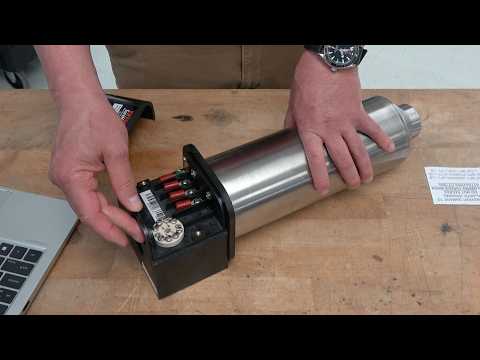
One surprisingly common issue involves overtightening fittings on the heater housing. The MAX and JET heaters include clear torque specifications for the threaded ports, warning labels on the housing, and installation guidance in the manuals and videos. Even so, we still occasionally see housings cracked from excessive torque. Unfortunately, once that housing cracks, it typically cannot be repaired.
We also see wiring issues fairly often—especially with thermocouples. Using the wrong thermocouple wire type, reversing polarity, or using incorrect wiring altogether can cause the temperature reading to behave incorrectly. For example, if thermocouple polarity is reversed, the system may think temperature is dropping when it’s actually rising. The controller then continues calling for more power, which can quickly destroy the heater.
Something as simple as crossing two wires can turn into a major failure.
What Happens When a Heater Fails?
When customers contact us about a failed heater, the first step is gathering information.
We ask about airflow, operating temperatures, pressure, voltage, gas type, controls, startup sequence, and the overall application. We’ll often compare that information against heater performance curves and operating recommendations to identify potential issues. Photos are extremely helpful during this process. In many cases, the failure mode is visually obvious.
If needed, the heater can be returned for evaluation. By disassembling the unit and inspecting the element condition, we can usually determine whether the issue was caused by airflow, overshoot, voltage problems, contamination, or another operating condition.
If a manufacturing defect is identified, the heater can be covered under warranty. But more often than not, the failure points back to application conditions or system setup.
The Goal Isn’t Just Heat — It’s Reliable Heat
One thing I always try to remind customers is that these heaters are designed for high-performance industrial processes. They respond quickly, operate at very high temperatures, and pack a lot of watt density into a relatively small space. That performance is what makes them effective—but it also means the surrounding system matters.
- Proper airflow
- Proper controls
- Proper ramp rates
- Proper wiring
- Proper startup procedures
All of those pieces work together. The good news is that once a system is configured correctly, these heaters can operate extremely reliably for a very long time.
If You’re Not Sure — Ask
One final piece of advice: don’t guess. If you’re unsure about airflow, wiring, controls, startup procedures, or anything else during installation, reach out before turning the heater on. An email with a few pictures can often prevent a failure entirely.
It’s much easier to answer a question upfront than it is to analyze a melted heater afterward. And honestly, that’s the outcome everyone wants.
