
VIGA Technology for Advanced Metal Powder Production
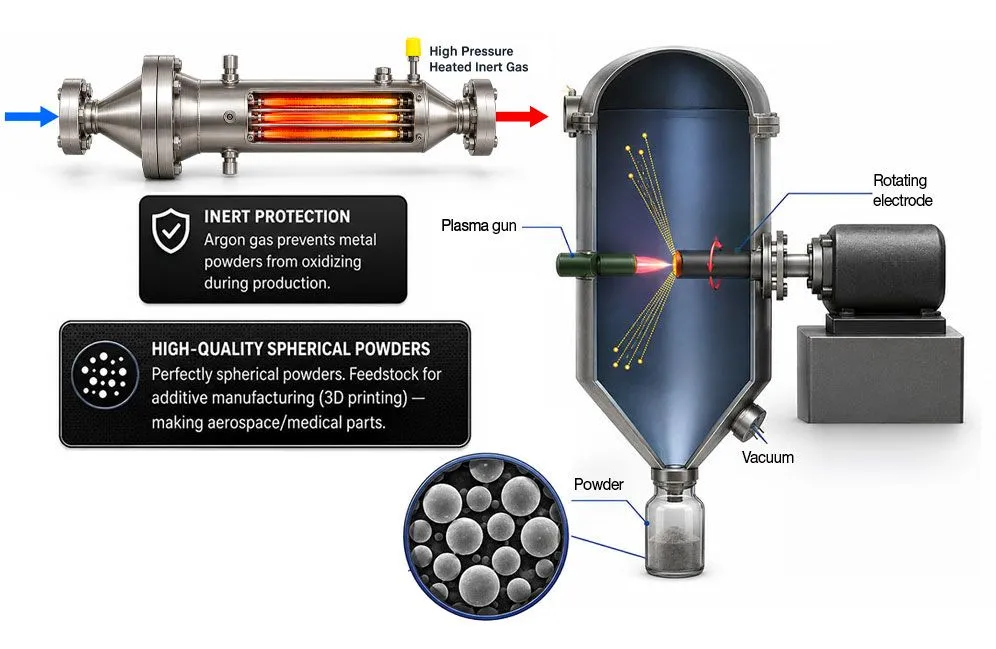
VIGA (Vacuum Induction Melting Inert Gas Atomization) is one of the leading technologies used to produce high-quality metal powders for additive manufacturing. In the process, metal is melted under vacuum conditions and atomized using high-pressure inert gas jets such as argon. The gas rapidly breaks the molten metal stream into extremely fine droplets that solidify into highly spherical powder particles during free fall inside the atomization chamber. The inert atmosphere protects the molten metal from oxidation while enabling tight control of particle size distribution (PSD), powder flowability, and final powder quality.
Preheating the atomization gas can further improve atomization efficiency by shifting the PSD toward finer particles and reducing overall inert gas consumption. Our rapid-response electric gas heaters are designed specifically for demanding process gas applications such as VIGA atomization. Unlike conventional systems that require extended preheat periods, our heaters achieve operating temperature quickly, reducing inert gas losses during startup and maximizing productive runtime.
The compact heater design also simplifies system integration. Because the heater reaches temperature rapidly, customers may avoid the need for expensive hot outlet valves or complicated gas recirculation arrangements. The result is a cleaner, more compact atomization skid with lower installed cost and improved operational efficiency.
As additive manufacturing continues to mature from a prototyping technology into a cornerstone of advanced industrial production, the quality and consistency of metal powders have become increasingly critical. Industries developing next-generation aerospace systems, hypersonic platforms, energy technologies, and extreme-environment components are demanding tighter control over powder morphology, chemistry, and particle size distribution than ever before. In these applications, process gas heating is no longer a peripheral utility — it is an enabling technology that directly influences atomization efficiency, powder yield, and final material performance. TUTCO’s SureHeat’s electric gas heaters help atomization system designers achieve these goals while minimizing inert gas consumption, reducing system complexity, and enabling more compact VIGA installations. By supporting the production of advanced metal powders, TUTCO heaters are helping drive the next generation of additive manufacturing forward.
Get A QuoteUnderstanding the VIGA Process
Producing metal powders for additive manufacturing is a lot more involved than simply melting metal and spraying it into a chamber. In VIGA systems, every part of the process is tightly controlled because even small variations can affect powder quality and, ultimately, the performance of the finished part.
The process starts with melting metal inside a vacuum induction furnace. Running under vacuum helps remove oxygen and contaminants that could compromise the chemistry of the alloy. Once the metal reaches the proper temperature, it flows through a nozzle into the atomization chamber where high-pressure inert gas — usually argon — hits the molten stream at extremely high velocity.
That impact breaks the metal apart into tiny droplets. As those droplets fall through the chamber, they cool and solidify into spherical powder particles. The goal is consistency: consistent shape, consistent particle size, and reliable flow characteristics. Those properties become especially important in additive manufacturing systems where powder behavior directly affects print quality and repeatability.
For manufacturers working with aerospace alloys, medical materials, or high-temperature superalloys, the VIGA process has become one of the most effective ways to produce powders with the level of control modern applications require.
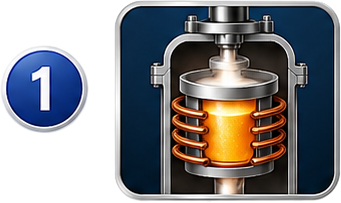 | VACUUM INDUCTION MELTING Metal is melted in a vacuum induction furnace to remove oxygen and contaminants and protect alloy chemistry. |
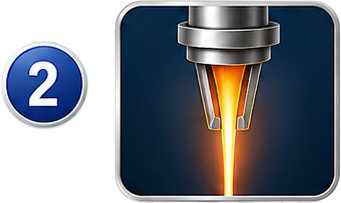 | MOLTEN METAL DELIVERY Once the target temperature is reached, molten metal flows through a precision nozzle into the atomization chamber. |
 | HIGH-PRESSURE GAS ATOMIZATION High-velocity inert gas–typically argon–impacts the molten stream, breaking it into extremely fine droplets. |
 | SOLIDIFICATION Droplets cool during free fall through the chamber and solidify into spherical powder particles. |
 | POWDER COLLECTION Powder is collected under vacuum in a sealed container, maintaining purity and ensuring consistent quality. |
The Benefits of Heated Inert Gas in Atomization
Heating the atomization gas may seem like a secondary part of the process, but it can have a meaningful effect on overall system performance. As gas temperature increases, the atomization characteristics change. The gas interacts differently with the molten metal stream, potentially improving droplet breakup and helping produce finer powders. Depending on the application and operating conditions, manufacturers may also achieve better yields while reducing overall inert gas consumption—an important consideration given the cost of argon in large-scale systems.
Another advantage comes during startup. Traditional systems can spend a long time warming up, consuming gas before production even begins. Rapid-response electric heaters can shorten that window considerably. Operators can get to temperature faster, stabilize the process sooner, and reduce gas losses during idle periods.
There is also a system-level benefit. Faster heating response may eliminate the need for some of the larger recirculation loops, bypass systems, or heated valve arrangements often used in slower thermal systems. Depending on system requirements, this can simplify the overall skid design and reduce installation complexity. Actual results depend on the specific application and operating conditions.
Why Electric Heating is Preferred for VIGA Systems
In high-purity powder production, cleanliness matters. That is one reason electric heating has become increasingly common in atomization systems. Gas-fired systems can introduce combustion byproducts into the process environment, something manufacturers generally want to avoid when working with sensitive alloys or tightly controlled powder chemistries. Electric heaters avoid that issue entirely. There is no flame, no combustion exhaust, and no added contamination risk from the heating source itself.
Electric systems also tend to respond much faster. That becomes valuable in processes where temperature stability directly affects atomization consistency. Instead of waiting through long thermal lag periods, operators can make quicker adjustments and maintain tighter control over the gas stream.
From an equipment standpoint, electric heating can also simplify integration. Modern inline electric gas heaters are relatively compact, making it easier to build cleaner and more space-efficient atomization skids without the additional infrastructure associated with combustion systems.
For many manufacturers, the move toward electric heating is not just about efficiency. It is about process control, repeatability, and maintaining a cleaner operating environment.
Additive Manufacturing Industries Using VIGA Powders
Additive manufacturing has moved well beyond prototyping. In many industries, printed metal components are now being designed directly into production systems. Aerospace remains one of the largest drivers. Aircraft manufacturers and propulsion developers use metal powders to produce lightweight structures, fuel system components, heat exchangers, and complex geometries that would be difficult to machine conventionally. The defense and hypersonics sectors are also pushing demand higher, particularly for advanced superalloys capable of surviving extremely aggressive operating conditions.
Beyond aerospace, metal powders produced through VIGA systems are finding their way into:
- Medical implants
- Energy systems
- Turbomachinery
- Research and development programs
- Space hardware
- High-performance automotive applications
Across all of these industries, powder consistency is directly tied to final part quality. That places increasing importance on the atomization process itself.
Challenges in Atomization System Design
Designing a VIGA system is rarely straightforward. There are thermal, mechanical, and process-related challenges happening simultaneously. The atomization gas system must maintain stable pressure and temperature while operating under demanding conditions. At the same time, system designers are trying to minimize gas usage, reduce startup losses, and avoid unnecessary complexity inside the skid.
Heating systems often become a focal point because slow thermal response can create operational bottlenecks. Long warmup times consume inert gas before production starts, and oversized support systems can quickly increase footprint and installation cost. There are also practical engineering concerns that show up over time — thermal expansion, valve protection, process stability, and maintaining repeatable temperatures during long production runs.
This is one reason rapid-response electric gas heating has gained traction in advanced atomization systems. Faster thermal control gives designers more flexibility while helping reduce some of the inefficiencies common in traditional heating approaches.
Why Rapid-Response Heating Matters
In atomization systems, startup efficiency matters more than many people realize. If the heating system takes too long to stabilize, operators may spend a significant amount of time circulating expensive inert gas before powder production even begins. Over time, those losses add up.
Rapid-response electric heaters help reduce that wasted time by reaching operating temperature quickly and responding faster to process changes. The system becomes productive sooner, and operators gain better control during transitions and process adjustments. That responsiveness can also help improve thermal consistency throughout the run. In applications where powder characteristics are closely tied to gas conditions, maintaining stable temperatures becomes an important part of maintaining consistent powder quality.
For facilities producing high-value aerospace or specialty alloy powders, improving startup efficiency and reducing gas waste can have a measurable impact on operating cost.
TUTCO SureHeat Heater Technologies for VIGA Applications
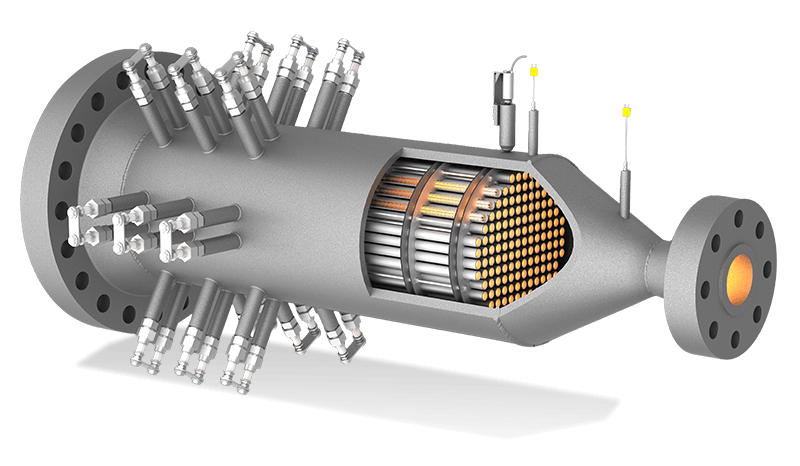 TUTCO SureHeat electric gas heaters are well suited for atomization environments because they are designed specifically for demanding process gas applications where temperature control and fast response are critical. Specialty Flanged Inline heaters are commonly used in applications involving elevated temperatures, pressurized gas streams, and continuous operation. TUTCO SureHeat heaters are designed with tight construction to minimize process-gas leakage, helping conserve costly inert gases such as argon. Their compact design makes integration easier, particularly in systems where space is limited and clean layout matters.
Depending on the application, systems may incorporate closed-loop controls, Type K thermocouples, and UL 508A control panels to maintain stable gas temperatures throughout the process cycle. For VIGA system designers, the goal is usually not just generating heat — it is generating controllable, repeatable heat in a way that supports overall process stability. That is where rapid-response electric gas heating can provide a real advantage.
