
Solving Manufacturer's Heating Challenge with the Serpentine II
We recently visited one of our long-term customers that we provide band heaters to. This was a first time visit to their facility as they are located in an area that we rarely get to. While we were there, we noted that they were using air heaters to dry and maintain products on their extrusion lines where heated air is used to dry and stabilize products before final processing. Without that heat, the material would begin to warp, creating substantial scrap and unnecessary waste. The customer had already tried a number of heating systems prior to our team introducing them to a solution reliable enough for the realities of the production floor.
Get A Quote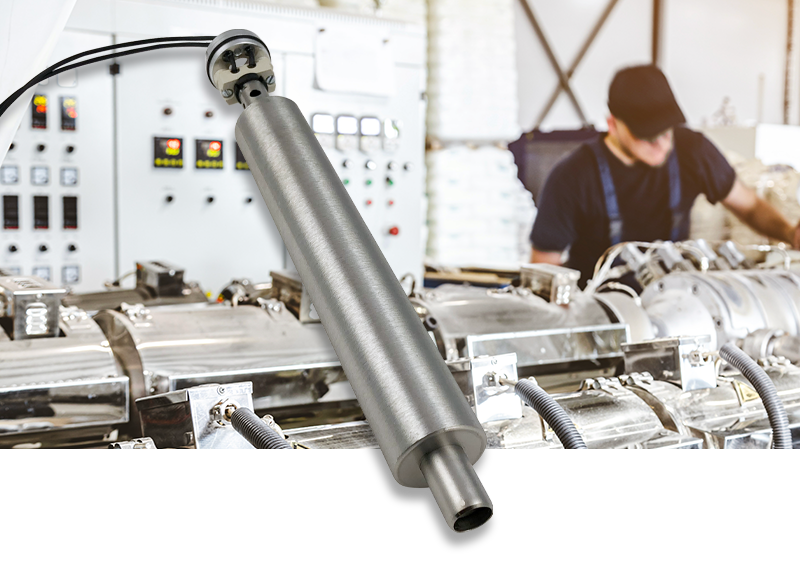
Their first approach involved using off-the-shelf hot air units that were essentially metal industrial versions of handheld blow dryers. While simple in concept, the heaters struggled to produce the temperatures required for the application. Each unit also needed its own electrical drop, which quickly turned into a maze of wiring across nearly two dozen production lines. Maintenance soon became another issue. Even in a relatively clean facility, enough airborne dust and debris existed to clog the small internal fans on a daily basis. Once airflow dropped, heater failures followed.
The problem became so routine that third-shift employees were regularly taking broken units apart and cobbling together working heaters from spare parts just to keep production moving. While that kind of “make it work” mentality is common in manufacturing, it created obvious safety concerns and consumed valuable labor resources.
The customer’s next attempt involved an all-in-one heater package with onboard controls and a brushless motor. From a temperature standpoint, the system performed much better, but it introduced an entirely new set of problems. The units used small washable filters that clogged quickly in the facility’s environment. Operators eventually removed the filters completely to maintain airflow, but doing so allowed dust and debris to be pulled directly into the motors. As airflow became restricted, heater temperatures climbed even higher. Eventually, the excessive heat began damaging the onboard controls themselves, in some cases literally melting components inside the units.
The controls also created operational inconsistency. Operators frequently adjusted temperatures using a simple dial control depending on what they felt was needed at the time. As temperatures drifted outside the ideal process range, scrap rates increased. The issue became so severe that maintenance personnel eventually disconnected the controls entirely just to stop constant adjustments on the floor.
Power consumption added another layer of frustration. These heaters operated close to 20 amps, which meant breakers were tripping regularly throughout the facility. During our visit, maintenance personnel were actively dealing with exactly that issue. With numerous heaters operating across roughly a dozen production lines, even resetting breakers became a recurring drain on production time. At the same time, operators still needed the flexibility to angle heaters and reposition nozzles depending on the shape of the extruded product.
After reviewing the application, we recommended the TUTCO SureHeat Serpentine II. Unlike the previous systems, the Serpentine II uses compressed air rather than relying on onboard fans or motors. That immediately eliminated one of the customer’s largest reliability concerns. Because the compressed air system already included proper filtration, dust and debris were no longer being pulled directly through the heater assembly.
The triple-pass heater design also offered another practical benefit: a cooler external surface temperature. In a busy manufacturing environment where operators regularly work around process equipment, reducing exposed surface temperatures can improve overall safety on the floor. The customer was also particularly interested in the heater’s field-replaceable heating core. Anyone familiar with industrial heating understands that heater failures eventually happen. The question is not usually if a heater will fail, but how quickly production can recover when it does.
With the Serpentine II, replacement is straightforward. Operators can power down the unit, remove the tail section, replace the heating core, plug in the new two pin heater core, and return the unit to service within minutes.
The Serpentine II also helped solve several operational issues at once. Because the heater operates below the 20-amp threshold, nuisance breaker trips were eliminated. The absence of onboard operator controls eliminated constant temperature adjustments at the line. Instead, process temperatures could be established through airflow settings and maintained consistently from shift to shift. Its compact footprint also made it easier to position and angle the heaters to match different extrusion profiles.
For the customer, the result was more than simply replacing a heater. It was a safer, cleaner, and far more reliable process built around a heater made in the USA and designed for real-world manufacturing conditions.
About the Serpentine II Heater
 Designed for demanding industrial environments, the Serpentine II Triple Pass Heater delivers precise, high-temperature process air up to 1,500°F (815°C) while maintaining a cooler outer shell for improved operator safety. Its rugged stainless steel construction and field-replaceable serpentine coil simplify maintenance and help minimize downtime on the production floor.
The heater’s compact, modular design makes it easy to integrate into OEM systems and industrial processes requiring reliable, repeatable heat. Common applications include plastics processing, automotive manufacturing, aerospace systems, electronics production, food processing, medical equipment, printing, and other industrial heating applications.
