
Hot-Air Heaters for Packaging Machinery Sealing and Shrink
TUTCO SureHeat has built electric air and gas heaters for OEM process equipment for more than 30 years, from a few kilowatts at a single seal nozzle to multi-megawatt custom systems, and to outlet temperatures above 1050 C (1922 F). Packaging machinery uses a narrow slice of that range. A gable-top carton seal needs clean, dry air in the hundreds of degrees at a nozzle the size of a thumb. A shrink tunnel needs far more mass flow at a much lower temperature. A tube filler needs a short, repeatable burst timed to a 40-to-1,000-tube-per-minute index. In every one of those positions, the heater is the part of the machine that decides whether the seal holds. This page covers where hot air does the work inside packaging machines, what temperature each station actually runs, and which SureHeat inline heaters fit each position.
Why Hot-Air Sealing Carries the Line
Hot air is the dominant sealing method in packaging machinery for one reason: it heats the polymer without touching the package. A heated jaw or sealing bar transfers heat by contact, which means it marks the print, picks up melted coating, and needs cleaning. Hot air reaches into a carton that is still open at the top, into the tail of a tube that must stay round, and around a film-wrapped tray from all sides at once. Nothing enters the seal area except air. The commercial pressure on these machines is steady. Gable-top and aseptic carton lines are moving to extended-shelf-life formats that require a sterilization step and a drying step on the same frame. Shrink sleeve labelling keeps taking share from pressure-sensitive labels because a sleeve decorates the full container and carries the tamper band in one pass. Both trends add hot-air stations to machines that previously had one or none. At the same time, packaging OEMs are being asked by their own customers to drop steam. A steam shrink tunnel needs a boiler, a condensate return, and a permanently wet zone next to a food-contact line. An electric hot-air tunnel needs a power feed. For a machine builder quoting into a dairy, a beverage plant, or a pharmaceutical packaging hall, the electric option is often the only one the plant will accept.
- No contact with the package, so the heat source never marks printed board, film, or a laminate tube
- No combustion products, no moisture, and no oil in the sealing airstream
- One air circuit can feed a multi-nozzle manifold across a full carton panel
Where the heater sits: gable-top and carton form fill-seal machinery
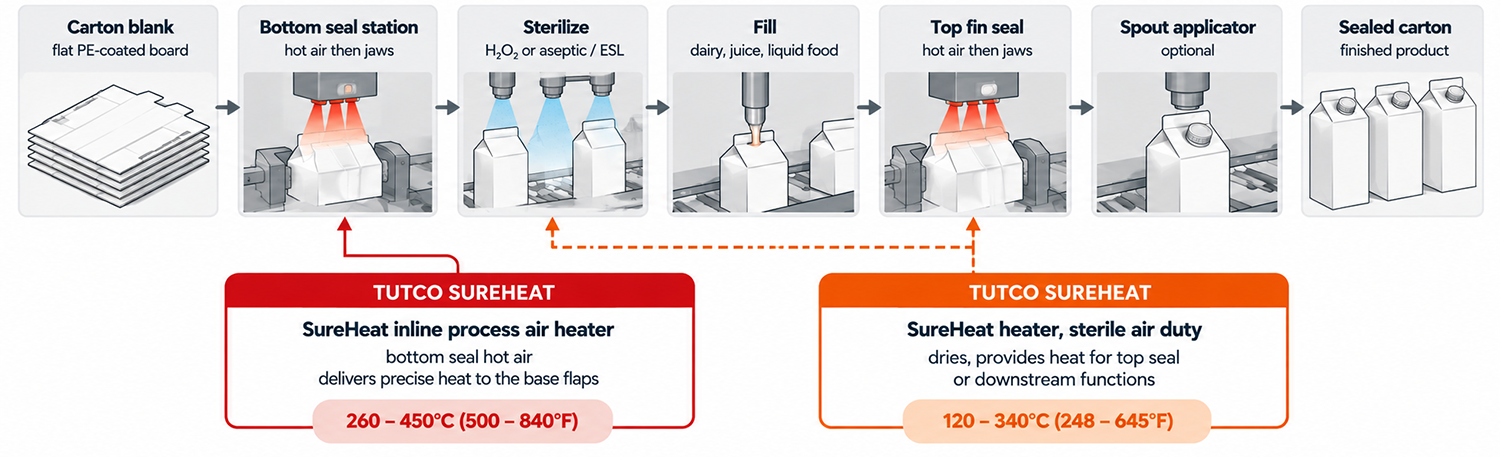
One machine, several heater duties: bottom seal, top fin seal, sterile air drying, shrink and sleeve tunnels on downstream packaging line.
Hot air melts the polyethylene coating at the bottom and top seal stations. A second heater dries sterilant on aseptic and ESL machines.
How the Heat Is Actually Used
On a form-fill-seal gable-top machine, the carton blank is polyethylene-coated paperboard. At the bottom-seal station the machine blows hot air through nozzles onto the bottom panels until the PE coating reaches melt. Pressure jaws immediately fold and press the panels, and the PE itself becomes the adhesive. The carton is then filled, and the same sequence repeats at the top-fin seal: hot air onto the fin panels, then jaws. There is no glue and no separate sealant. The only variables are air temperature, air volume at the nozzle, and dwell time against the index rate. Machines in this class run cartons from 120 ml up to 5 L, and the larger panels need more flow at the same temperature rather than hotter air.
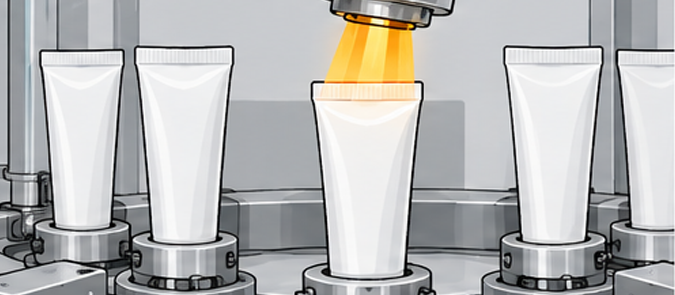
Tube filling works the same way at a different scale. The tube arrives at the sealing station open at the tail. Hot air is blown inside the open end to bring the inner surface of the plastic or laminate to melt, and the jaws close and form the end seal. Published hot-air stations on tube fillers in this class sit in the low single-digit kilowatt range, because the heated volume is small and the cycle is short.
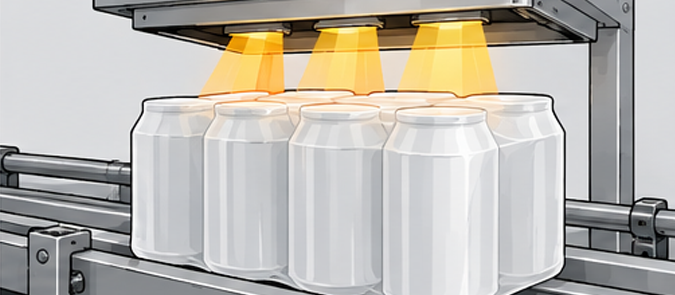
Shrink work inverts the priorities. In a shrink sleeve tunnel or a film bundling tunnel, the air is recirculated through a plenum and blown onto the sleeved or wrapped product through rows of adjustable nozzles. Temperature is modest. Uniformity and air volume are everything, because a sleeve that sees 20 C more on one side distorts the print or wrinkles at the shoulder. Many of these tunnels are zoned, with a pre-shrink section and a shrink section held at different setpoints.
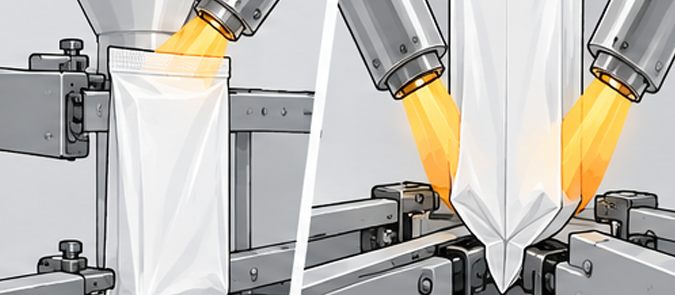
Bag closing adds a fourth pattern. On an open-mouth poly bag, a hot-air sealing head melts the bag top before the pressure belts close it. On a pinch-bottom paper bag, the same hot-air unit does not melt the substrate at all. It reactivates a pre-applied hot melt before folding and pressing. Same hardware, different target temperature, and the paper substrate will scorch if the air runs where a poly bag would need it.
- Bottom and top-fin carton seal: melt the PE coating, then press with jaws
- Tube tail seal: hot air inside the open end, then form the end seal
- Shrink sleeve and film tunnels: recirculated air through zoned, adjustable nozzles
- Bag closing: melt the poly top, or reactivate hot melt on pinch-bottom paper
- Aseptic and ESL fillers: hot sterile air to dry hydrogen peroxide off the carton after sterilization
The Engineering Problem at the Seal Station
The failure modes in this application are not about peak temperature. SureHeat inline heaters reach 760 C (1400 F) on standard models, well above anything a packaging seal needs. The problems are about what happens around the heater over millions of cycles.
Element contamination is first. A seal nozzle sits centimeters from melting polyethylene. Paperboard dust, PE fume, label adhesive, and ink solvent all migrate toward the hot zone. Where the airflow path and the element are poorly separated, deposits build on the coil, local watt density rises at the deposit, and the element burns through at that spot. The SERPENTINE coil geometry spreads watt density over a large surface area instead of concentrating it, which is the single biggest factor in element life at a dirty station.
Thermal lag against line speed is second. A carton machine indexing at high speed gives the air stream a fixed window. If the heater outlet temperature drops when the blower steps up and recovers only after several cartons have passed, those cartons get a cold seal, and a cold seal on a liquid carton is a leak in the field. What closes that gap is a low thermal mass element with a thermocouple at the outlet rather than on the shell, and a closed-loop panel that reacts to the outlet reading.
Duty cycling is third. Many of these stations are not continuous. The heater is driven hard during production, idled during changeover, and cycled at every line stop. Repeated thermal cycling is what cracks a heavy sheathed element. Open-coil construction on a ceramic core tolerates cycling far better than a mass-heavy immersion-style element of the same rating.
Then come the constraints specific to packaging. Food and pharmaceutical packaging means nothing may shed into the air that touches the package, which rules out combustion air and oil-bearing air outright. Aseptic and ESL drying air must stay dry, because any condensation on the way to the nozzle leaves water on a carton the machine just sterilized. Pressure drop matters because most of these machines use a modest regenerative blower rather than a compressor, so a heater that costs too much static at the required flow forces a larger blower and a bigger cabinet. And on a shrink tunnel the plenum air returns already hot, so the heater must be rated for an elevated inlet temperature, not for room air. Element contamination from PE fume, board dust, ink, and adhesive at the nozzle
- Element contamination from PE fume, board dust, ink, and adhesive at the nozzle
- Outlet temperature droop when blower flow steps up against a fixed index window
- Thermal cycling damage from changeovers and line stops, not from running hot
- Condensation in the duct on sterile drying air after a peroxide step
- Pressure drop across the heater forcing a larger blower than the machine footprint allows
- Elevated inlet air temperature in recirculating shrink tunnel plenums
- Nothing may enter the airstream that reaches food or pharmaceutical packaging
TUTCO SureHeat Heaters for Packaging Machinery Sealing
SureHeat Jet Process Air Heater
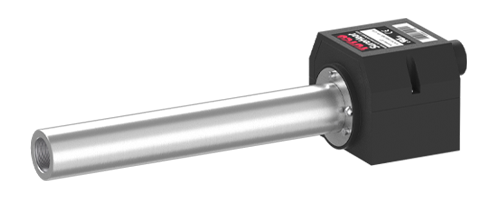
The seal-station heater. Fits the carton fin seal, carton bottom seal, tube tail seal, and single-head bag sealer, where the machine needs high air temperature through a small nozzle or a short manifold.
- 3 kW to 8 kW at 240 V single phase, outlet to 760 C (1400 F)
- Holds accurate control down to 2 SCFM, and passes 6 to 15 SCFM at maximum temperature, with 135 SCFM maximum flow
- Dual Type K thermocouples at inlet and outlet, so the control loop reads the air rather than the shell
- Built-in flow loss protection shuts the element down if the blower stops mid-cycle
- Maximum inlet temperature 200 F (93 C), so it belongs at a fresh-air station rather than in a hot plenum
- 1.6 kW to 24 kW with 170 V, 240 V, and 480 V options, outlet to 760 C (1400 F)
- Flow to 135 SCFM, which covers tunnel duty as well as nozzle duty
- Style A accepts inlet air to 900 F (482 C) for recirculating plenums; Style B is for near-ambient inlet up to 200 F
- NPT port sizes from 3/8 in to 2-1/2 in, so the heater adapts to existing machine plumbing
- SERPENTINE element on a ceramic rod core, replaceable in the field
- Maximum inlet pressure 150 psi
- 6 kW to 36 kW, 240 V single phase or 480 V three phase, outlet to 760 C (1400 F)
- Up to 68 SCFM with minimal pressure drop, so an existing regenerative blower usually does not need resizing
- Dual built-in Type K thermocouples for inlet and outlet monitoring
- Patented SERPENTINE coil design for heat transfer and element life under cycling
- Built-in flow loss protection and closed-loop SureHeat panel compatibility
- Stainless steel construction with NPT threaded connections, 60 psi maximum operating pressure
SureHeat Threaded Inline Heaters
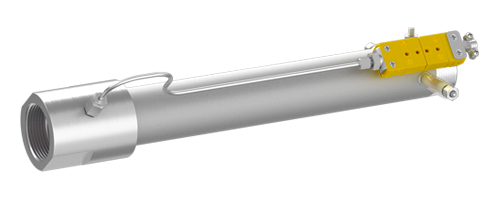
The OEM drop-in. Replaces a heat gun or an in-house wound coil at a seal nozzle, and serves as the heater in a recirculating shrink tunnel plenum where the return air arrives already hot.
SureHeat Max Process Air Heater
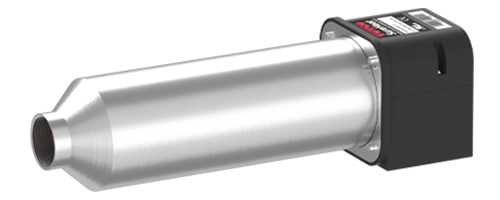
The higher-power zone heater. Used where one control loop must carry a full shrink tunnel zone, a wide multi-nozzle carton head, or a large-format bag sealing head.
Electric Hot Air Against Steam, Flame, and the Heat Gun
Three incumbent methods still sit in packaging machines, and each loses to a controlled electric inline heater for a specific reason. Steam shrink tunnels give excellent heat transfer and uniformity, and that is why they persist on sleeve lines. The cost is a boiler, a condensate return, insulated steam piping, and a permanently wet zone adjacent to the product. For a machine builder quoting into a dairy, beverage, or pharmaceutical packaging hall, that infrastructure is often what loses the order. An electric tunnel ships as one assembly, needs only a power feed, and can be zoned to different setpoints without a steam trap in each zone.
Direct flame and gas-fired air are rare in this sector and should stay rare. Combustion puts water vapor and combustion byproducts into air that touches food packaging, and on an aseptic line it puts them onto a carton that was just sterilized. It also brings a flue, a gas permit, and a flame safety interlock onto a machine that otherwise needs none of them.
The quietest incumbent is the heat gun. Several machines in this sector still use one or two industrial heat-gun blowers at a neck-band tunnel or a small seal station. A heat gun is cheap, and it is also the part of the machine that fails first: no closed-loop outlet control, no flow loss protection, and no element designed for continuous duty. Replacing it with a JET or threaded inline heater and a SureHeat panel turns an open-loop consumable into a controlled process variable the machine PLC can read.
- No combustion byproducts, water vapor, or oil in air that contacts food or pharmaceutical packaging
- Closed-loop control on the outlet thermocouple, to +/- 1 C on SFI builds, instead of an open-loop setpoint
- Fast response and high ramp rate, so outlet temperature recovers inside the index window when flow steps up
- Compact inline footprint that mounts on the station, with no boiler, condensate return, flue, or gas permit
- Zone-by-zone setpoints in a tunnel without steam traps or separate piping runs
- Built-in flow loss protection, which a heat gun or a bare coil does not provide
Matching the Heater to the Station, Not to the Machine
Packaging OEMs often carry one heater part number across a whole machine family, then discover it is oversized at the tube station and undersized in the tunnel. The two ends of this sector have genuinely different requirements, and the cost of the wrong fit shows up as scrapped product rather than as a claim against the heater.
A seal nozzle needs high temperature at low flow. SureHeat JET heaters run 3 kW to 8 kW at 240 V single phase and hold accurate control down to 2 SCFM, passing 6 to 15 SCFM at maximum temperature. That is the right shape of capacity for a carton fin seal or a tube tail: enough temperature headroom to run the air well above the polymer melt point, with controllable behavior at the small flows a single nozzle or short manifold passes.
A shrink tunnel needs the opposite. Flow carries the heat to the product and the setpoint is low. Threaded inline heaters cover 1.6 kW to 24 kW across 170 V, 240 V, and 480 V with flow to 135 SCFM, and Style A units accept inlet air up to 900 F (482 C), which is what makes them workable in a recirculating plenum where the return air is already hot. SureHeat MAX covers 6 kW to 36 kW in single and three phase with dual built-in Type K thermocouples at inlet and outlet, for tunnel zones and wide multi-nozzle heads that need more installed power behind a single control loop.
Where a machine has an unusual envelope, a flanged mount, a sterile air duct, or a demand for very tight control, the Specialty Flanged Inline family is built to the application. Standard SFI designs reach 900 C (1652 F) outlet with control to +/- 1 C and a 50 C per second ramp rate, and custom designs go to 1050 C (1922 F) and 100 C per second. On a packaging machine the temperature headroom is irrelevant. The control precision and the ramp rate are the reason to specify it.
- Seal nozzle: high temperature, low flow, tight control at 2 to 15 SCFM
- Tunnel zone: modest setpoint, high flow, hot inlet air, uniformity across the product
- Wide multi-nozzle head: more installed kW behind one loop, inlet and outlet thermocouples
- Sterile or engineered duct: flanged build, +/- 1 C control, high ramp rate
Temperature Ranges and Process Objectives
| Process Stage | Temperature (ºF) | Temperature (ºC) | Basis | Note |
| Gable-top carton bottom seal (PE-coated board) | 500-840º F | 260-450º C | typical | Industry-typical nozzle air temperature for melting the PE coating. Carton machine builders do not publish the figure. |
| Gable-top top-fin seal after filling | 500-840º F | 260-450º C | typical | Same melt target as the bottom seal. Cartons up to 5 L are generally handled with more flow at the same temperature rather than with hotter air. |
| Sterile hot-air drying of hydrogen peroxide (aseptic / ESL) | 250-570º F | 120-300º C | typical | Follows carton sterilization on aseptic and ESL fillers. The strictest air-quality step in the sector: the air contacts a sterilized food package, so no combustion carryover, oil, or condensate is acceptable. |
| Laminate and plastic tube tail sealing | 480-840º F | 250-450º C | typical | Hot air blown inside the open tube end before the jaws form the seal. Tube fillers in this class publish dedicated hot-air stations in the low single-digit kilowatt range, around 3.3 kW on some models. |
| Shrink sleeve and tamper-band tunnels (PVC, PETG, OPS) | 250-480º F | 120-250º C | typical | Tunnel builders across the sector publish this band, and several specify controls topping out at 250 C. Different builders run the same sleeve material at different setpoints, which is itself useful: the tunnel must be adjustable, not fixed. |
| Shrink film bundling and tray wrapping tunnels | 300-500º F | 150-260º C | typical | Forced-convection and recirculating tunnels. Published guidance clusters near 180 C for PVC and POF and higher for polyethylene film, which is why zoned tunnels are common. |
| Hot-air bag sealing and pinch-bottom hot-melt reactivation | 390-480º F | 200-450º C | typical | The high end melts the poly bag top. Hot-melt reactivation on pinch-bottom paper bags sits near the low end, typically 200-350 C, because the paper substrate will scorch above it. |
Real- World Applications
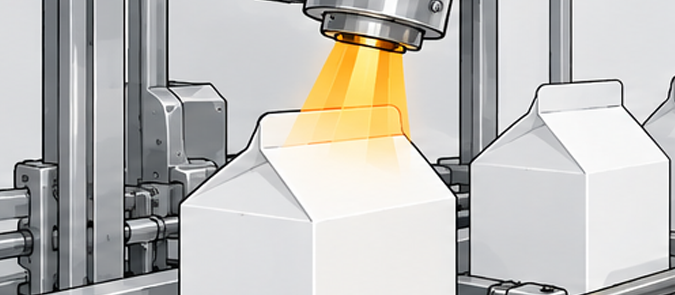
Form-Fill-Seal Gable-Top Carton Machines
Hot air melts the polyethylene coating on paperboard at the bottom-seal station before filling, and again at the top-fin seal after filling, so pressure jaws can form a leak-proof seal with no glue. Machines in this class run cartons from 120 ml to 5 L, from manual top and bottom sealers up to high-speed fillers with spout applicators and carton sterilization. Nozzle air is typically 260 to 450 C (500 to 840 F). The design constraints are reaching every point on the panel evenly and recovering outlet temperature fast enough that no carton in the index sees a cold seal. SureHeat JET and threaded inline heaters feed single nozzles and short manifolds, and SureHeat MAX carries wide multi-nozzle heads on one loop.
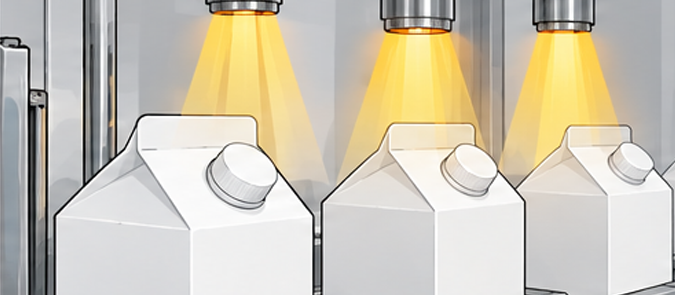
Aseptic and ESL Sterile Air Drying
On aseptic and extended-shelf-life fillers, cartons are sterilized with hydrogen peroxide and then dried with hot sterile air, typically 120 to 300 C. This is the most demanding air-quality requirement in the sector. The air touches a sterilized food package, so it must carry no combustion products, no oil, and no condensate. Electric inline heating meets that without additional air treatment. SFI inline heaters with closed-loop SureHeat panels hold the drying air at setpoint while the machine cycles, and threaded inline heaters handle elevated inlet air where the drying duct recirculates.
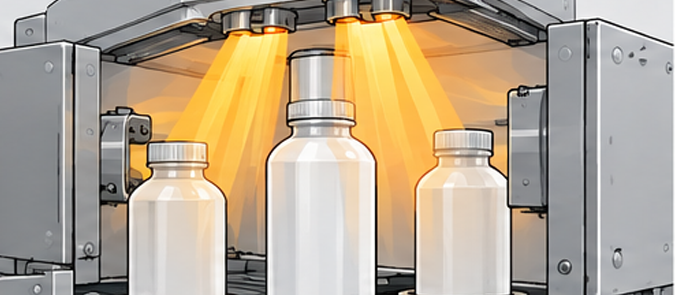
Shrink Sleeve and Tamper-Band Tunnels
Sleeve applicators place a PVC, PETG, or OPS sleeve on a container, and a hot-air tunnel shrinks it to the contour. Published tunnel bands across the sector run 120 to 250 C, and the same sleeve material is run at different setpoints by different builders, which tells a designer something useful: the tunnel has to be adjustable, not fixed. Pre-shrink and shrink zones usually hold separate setpoints. The air is recirculated, so the heater sees a hot inlet. SureHeat MAX and threaded inline Style A heaters feed the plenum, and Serpentine elements serve as the heated section inside an OEM-designed plenum.
Shrink Film Bundling, Tray Wrapping, and Side Sealers
Forced-convection and recirculating tunnels downstream of L-bar sealers, side sealers, and bundlers heat the air that shrinks film around a tray or a bundle. Published setpoints cluster near 180 C for PVC and POF and run higher for polyethylene film, with tunnels generally controllable to 250 or 260 C. Flow and uniformity set the result, not peak temperature. SureHeat MAX inline heaters cover the installed power these zones need at up to 68 SCFM with minimal pressure drop, which usually means the existing blower stays in the design.
Tube Filling and Closing
Tube fillers running 40 to 1,000 tubes per minute blow hot air into the open tail of a plastic or laminate tube to bring the inner surface to melt, then close the jaws to form the end seal. Published hot-air stations on machines in this class sit in the low single-digit kilowatt range, around 3.3 kW on some models, with air typically 250 to 450 C. The engineering issue is repeatability at index speed and element life at a station surrounded by product and laminate fume. A SureHeat JET or threaded inline heater in the 3 to 4 kW class drops into this position as an OEM subassembly.
Bag Closing and Pinch-Bottom Sealing
Open-mouth bagging and bag closing lines use a hot-air sealing head to melt the top of a poly bag before the pressure belts close it, with published heads running 200 to 450 C. The same hardware on a pinch-bottom paper bag does something different: it reactivates pre-applied hot melt at a lower target, typically 200 to 350 C, because paper scorches above that. Running one head across both bag types at one setpoint is where builders get into trouble. Threaded inline and SFI heaters with closed-loop panels let one machine hold two validated setpoints and switch between them by recipe.
Get Started on Heating Solutions
Packaging machinery is an OEM business, so the heater must fit the frame, the blower, the cabinet, and the index rate you already have. Send us the station: the air volume at the nozzle, the available voltage, the inlet air temperature, the index or line rate, and the target seal or shrink temperature. We will tell you which SureHeat family fits, what it does to your pressure drop, and whether the station needs a stock inline heater, a Serpentine element inside your own plenum, or an engineered SFI build. If you are replacing a heat gun or an in-house coil on an installed machine, send the existing part and the failure mode and we will start there.
Get A Quote Jet Process Heaters
 Max Process Heaters
 SureHeat Jet vs. Max Air Heaters
 Threaded Inline Heaters
Frequently Asked Questions
Then you probably want a Serpentine element rather than a packaged inline heater. Many tunnel and sealing-head designs put the element directly in an OEM-built plenum so the air path is tuned to the product. Send the plenum geometry, the flow, the inlet air temperature, and the setpoint, and we specify the element and the control scheme to match.
Electric inline heating is the straightforward choice there precisely because nothing is added to the airstream. There is no combustion, so no water vapor or combustion byproducts reach a carton that was just sterilized with hydrogen peroxide, and there is no oil carryover as there can be from a compressed air source. Drying air in this step is typically 120 to 300 C, which is well inside the range of every SureHeat inline family.
Contamination and watt density, in that order. PE fume, board dust, ink, and adhesive migrate to the hot zone and build up on the coil, and wherever a deposit forms the local watt density rises and the element eventually fails there. The SERPENTINE open-coil design spreads watt density over a large surface area on a ceramic core, which slows that mechanism and also tolerates the thermal cycling that comes with changeovers and line stops. Elements are field replaceable, and Serp VI replacement elements are available.
Yes. A closed-loop SureHeat control panel reading the outlet thermocouple holds whatever setpoint the machine PLC calls for. A bag closer can run a poly-top melt setpoint and a lower pinch-bottom hot-melt reactivation setpoint as separate recipes, and a shrink tunnel can hold different zone setpoints for PVC, PETG, and OPS.
It depends on the model and the flow. SureHeat MAX is rated to 68 SCFM with minimal pressure drop, and JET and threaded inline heaters pass up to 135 SCFM. Because most packaging machines use a regenerative blower rather than a compressor, we size the heater against your actual flow and available static pressure so the existing blower stays in the design. Send the blower curve or the model number with the inquiry.
It is a specification item, not a problem, but it narrows the choice. Threaded inline heaters in Style A accept inlet air up to 900 F (482 C), which covers any recirculating packaging tunnel. SureHeat JET is limited to a 200 F (93 C) inlet, so it belongs at a fresh-air seal nozzle rather than in a hot plenum. Give us the return air temperature at steady state and we size from that, not from ambient.
In most cases yes, and that conversion is common. A SureHeat JET at 3 to 8 kW, or a threaded inline heater from 1.6 kW up, covers the same duty with closed-loop outlet control, dual Type K thermocouples, and built-in flow loss protection. The difference on the machine is that you supply the blower and the air path rather than getting an integrated fan, which is usually an advantage because one blower can then serve several stations and the flow becomes something you control.
Nozzle air is typically 260 to 450 C (500 to 840 F) for both the bottom seal and the top-fin seal. Carton machine builders in this sector generally do not publish the figure, so treat that band as industry-typical and validate it against your own board stock, nozzle standoff, and index rate. The goal is to bring the PE coating to melt inside the dwell window, not to run the air as hot as possible.
