
Electric Air Heaters for Hypersonic Wind Tunnels
The Critical Role of Air Preheating in Hypersonic Testing
As the demand for higher heat and higher pressure has grown, TUTCO SureHeat has been defining the benchmark for electrical air preheaters used in hypersonic wind-tunnel applications. Our solutions cover power levels from just a few kilowatts to multi-megawatt systems (up to 200 MW in custom configurations), delivering ultra-fast heat-up times of only a few seconds and reliably achieving outlet air temperatures up to 1,100 °C in custom configurations. Each heater is a fully customized, application-specific design, engineered to meet the most demanding pressure, temperature, and performance requirements.
Photos courtesy of Lawrence Livermore National Laboratory
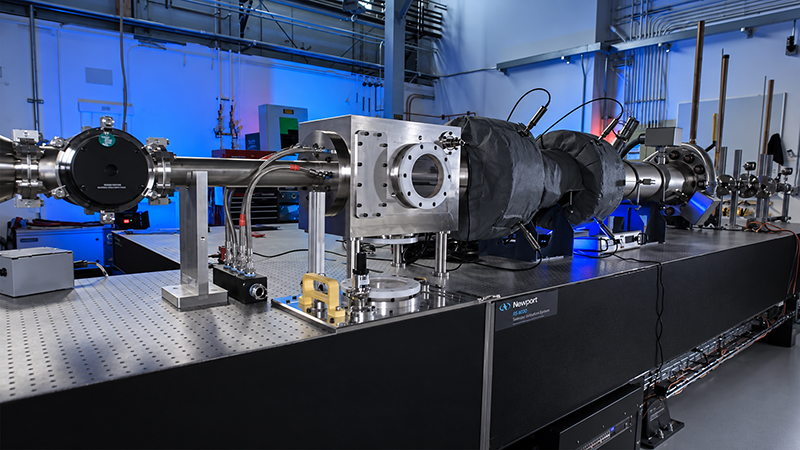
Why Preheating Matters in Hypersonic Wind Tunnels
Hypersonic wind tunnels require the test gas — typically air — to be significantly preheated before it expands through the nozzle to hypersonic speeds. Without this preheating, the extreme cooling caused by that expansion would drop static temperatures low enough to cause condensation, freezing, or outright liquefaction of the air, directly undermining flow quality and measurement accuracy. In practice, air stored near ambient begins to liquefy from expansion cooling above roughly Mach 4, which is why a dedicated preheater sits between the pressure vessel and the nozzle.
Beyond preventing liquefaction, preheating is necessary to replicate the thermodynamic conditions of real hypersonic flight. At these speeds, total (stagnation) temperature governs the test envelope — influencing gas density, viscosity, and the speed of sound — and it drives high-temperature effects such as shock-induced heating, molecular dissociation, and chemical non-equilibrium, all of which must be accurately reproduced in ground testing. Preheating the air is therefore fundamental to achieving both dynamic and thermochemical similarity between wind-tunnel tests and actual flight. Developing a reliable, high-performance air heater is consequently one of the most critical engineering challenges in building a modern hypersonic test facility.
A Brief History of Wind Tunnel Heating Research
The story of hypersonic wind tunnel heating is really the story of aerospace ambition running ahead of available technology — and engineering gradually catching up.
The first practical solution was the combustion heater: burning fuel — typically hydrogen, methane, or propane — to heat a large pressure vessel of air before the run. This approach worked at a coarse level but introduced combustion products into the airstream, contaminating the test environment. Indirect heat exchangers and pebble-bed (storage) heaters were developed to address this, transferring thermal energy across a solid wall or a heated ceramic matrix to preserve air purity, but these added mass, thermal inertia, and complexity. The temperature ceilings imposed by heat-exchanger and storage materials became a persistent constraint on achievable total enthalpy, and storage-type heaters remain relatively inefficient and slow to cycle.
The emergence of advanced electrical heating technologies — including high-power inline designs using patented element geometries — has fundamentally changed what is achievable. Today, electrical inline heaters can deliver megawatt-scale power, ramp from ambient to 600 °C in under 10 seconds (up to 100 °C/s in custom builds), and sustain outlet temperatures up to 1,100 °C in custom configurations, all while keeping the airstream chemically clean. This represents the culmination of more than seven decades of incremental engineering progress in hypersonic ground testing.
Introducing the TUTCO SureHeat Specialty Flanged Inline (SFI) Air Heater
The TUTCO SureHeat Specialty Flanged Inline (SFI) heater is a high-performance electric air heater purpose-built for demanding research and industrial applications that require precisely controlled, high-temperature, high-pressure gas streams. Developed to address the real-world shortcomings of both combustion-based systems and conventional resistance heaters, the SFI represents the current state of the art in inline electric process heating.
At the heart of the SFI is TUTCO SureHeat’s patented Serpentine™ heating element technology. Rather than relying on traditional tubular or immersion-type elements, the Serpentine™ design achieves very high-power watt density within a compact form factor — SFI heaters can be as much as 8 to 12 times smaller than equivalent tubular or immersion designs. This size advantage directly translates to reduced facility footprint, simpler installation, and lower infrastructure costs.
The heater itself consists of a precision-engineered metal housing — a round pressure pipe built to ASME Section VIII, Division 1 pressure vessel standards — with flanged ends that connect directly into the customer’s existing piping. This flanged inline configuration means the SFI integrates into a wind tunnel’s air supply circuit without the need for custom ductwork, large heat exchanger vessels, or significant civil modifications. Power supply and control instrumentation connections are handled through purpose-built feed-throughs on the housing. Internal “K”-type thermocouple sensors monitor temperature at multiple points — on the element itself, at the inlet, and at the outlet — feeding TUTCO SureHeat’s Over Temperature Protection (OTP) system, which guards elements against premature failure and allows the heater to operate continuously for extended periods without overheating.
SFI-HP vs. SFI-LP: Two Variants
SFI-HP (High Pressure) — designed for high-pressure air sources above 50 psi (3.5 bar), with elements aligned axially with the airflow. Achieves outlet temperatures of 2012 °F (1100 °C) standard, or higher in custom configurations.
SFI-LP (Low Pressure) — designed for low-pressure sources such as regenerative blowers, using crossflow elements to minimize pressure drop. Achieves outlet temperatures up to 1475 °F (800 °C).
Each SFI system is delivered as a complete, integrated solution: the heater unit plus a dedicated control cabinet. The cabinet includes a phase-angle fired SCR power controller, a PID-based digital temperature controller, and a four-input OTP limit circuit — all engineered specifically to match the thermal response characteristics of the Serpentine™ elements.
SFI Heater Specifications at a Glance
| Parameter | Custom Design |
| Maximum Pressure | 3000 PSI (207 bar) |
| Maximum Outlet Temperature | 1050ºC - 1100ºC |
| Temperature Control | ±1°C |
| Maximum Power | Up to 200 MW |
| Ramp Rate | Up to 100°C/sec |
| Process Gases | Air, N2, Ar, He, CO2, H2, steam, syngas & more |
| Maximum Flow Rate | 2000 SCFM and higher |
| Flange | Standard ANSI / custom |
| Housing Material | 316 Stainless Steel Standard. Custom alloys available. |
Key Terms for Facility Designers
Stagnation (total) temperature: The temperature the gas would reach if brought to rest; it sets how hot the supply air must be to avoid liquefaction after nozzle expansion.
Specific total enthalpy (MJ/kg): The energy content per unit mass of the flow — the primary yardstick facilities use to describe how closely a test replicates real flight conditions.
Thermochemical non-equilibrium: The regime where molecular dissociation and chemical reactions in the hot gas do not keep pace with the flow, a key real-gas effect in hypersonic testing.
Blowdown wind tunnel: A facility that runs from stored high-pressure gas for seconds at a time — the class of tunnel where inline electric preheating fits most naturally.
SFI Use Cases in Hypersonic Research
The SFI heater’s combination of chemical cleanliness, precise controllability, rapid thermal response, and high power density makes it directly applicable across the full breadth of hypersonic research activities. The following areas represent the most relevant application domains.
Re-entry Vehicle Thermal Protection System (TPS) Testing
Validating the thermal protection systems of re-entry vehicles — heat shields, ablative materials, ceramic tile arrays — requires sustained exposure to high-enthalpy, high-temperature flow that accurately replicates stagnation heating. The SFI’s ability to deliver chemically clean air at precisely controlled total temperatures ensures that material response data is not confounded by the presence of combustion products, and that test conditions can be reproduced shot-to-shot with high fidelity.
Scramjet Inlet and Combustor Research
Scramjet development depends critically on understanding air behavior at the engine inlet under hypersonic flight conditions, where the incoming air is already at high temperature and, at the upper Mach range, partially dissociated before it ever reaches the combustor. SFI heaters can supply the precise total temperature and mass flow rate conditions needed to simulate these inlet states, enabling systematic studies of shock-boundary-layer interactions, inlet performance, and fuel-air mixing that would be impossible with contaminated or poorly controlled airstreams.
High-Enthalpy Aerodynamics and Aerothermodynamics
Understanding how hypersonic vehicles — missiles, boost-glide systems, space planes — behave aerodynamically in high-enthalpy flow requires test conditions where total temperature governs not just Mach number but also gas viscosity, density, and the onset of real-gas effects. The SFI’s rapid ramp capability and precise parameter control allow researchers to sweep across Mach and Reynolds number combinations systematically, generating the aerodynamic databases needed for vehicle design and certification.
Advanced Optical Diagnostics Support
Modern hypersonic research depends heavily on non-intrusive measurement techniques: Schlieren and shadowgraph imaging, particle image velocimetry (PIV), planar laser-induced fluorescence (PLIF), filtered Rayleigh scattering (FRS), coherent anti-Stokes Raman spectroscopy (CARS), and high-resolution heat flux mapping. All of these techniques require optically clean, contaminant-free flow. This matters most for molecular Rayleigh-based methods: the signal scattered from gas molecules is inherently weak, so any condensation droplets or combustion particulates produce strong Mie scattering that swamps it. By preventing condensation and staying free from flames, soot, and combustion radiation, the SFI’s electrical heating preserves the clean, particulate-free environment these methods demand.
Short-Duration and Blowdown Facility Testing
Many hypersonic programs use blowdown tunnels and other short-duration facilities with run times measured in seconds. These demand heating that responds extremely quickly and repeats reliably from run to run. The SFI reaches ambient-to-600 °C in about 10 seconds — a capability physically impossible for the large thermal mass of a gas-fired or pebble-bed heat-exchanger system. For true impulse facilities such as reflected shock tunnels and expansion tubes, where the test-gas enthalpy is generated by the shock process itself, an inline heater like the SFI is typically used to precondition supply or driver gas rather than as the primary heating stage.
University Research and Government R&D Programs
TUTCO SureHeat offers electric air heaters tailored to specific wind-tunnel segments: aerospace, defense, propulsion, universities, and R&D. For academic and government research institutions where experimental flexibility and diagnostic cleanliness are as important as raw power output, the SFI’s customizability, control precision, and compact footprint make it an ideal platform.
Gas-Fired/Pebble-Bed Heaters VS. Electric Heaters
| Criterion | Gas-Fired/Pebble-Bed Storage | Electric Inline (SFI) |
| Flow cleanliness | Risk of combustion products / particulate carryover | Chemically clean — adds no species |
| Max temperature | Capped by heat-exchanger / storage-material limits | Up to ~1,100 °C in custom configurations |
| Thermal inertia / ramp | Large mass → slow warm-up & cool-down | Fast ramp, up to 100 °C/s |
| Control & repeatability | Coupled to combustion stability & fuel-air ratio | Independent T, mass flow, pressure; ±1 °C |
| Optical diagnostics | Flames, soot, radiation interfere | Flame-free, optically clean flow |
| Footprint & install | Large vessels, civil modifications | 8–12× smaller; flanged inline drop-in |
| Safety & complexity | Fuel handling, ignition, exhaust | No fuel systems to manage |
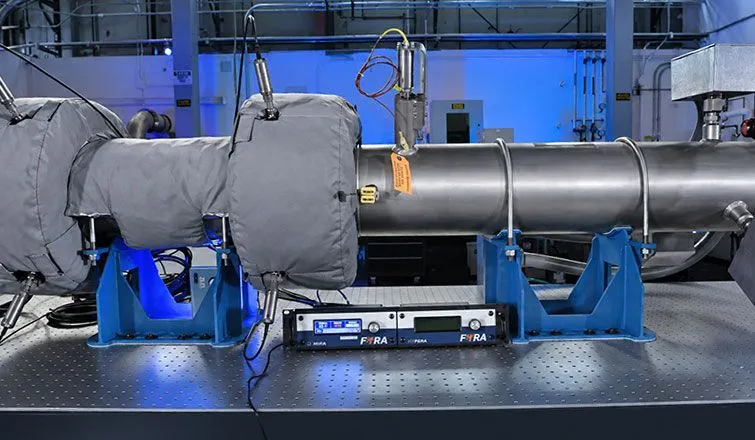
Why Electrical Heating is the Preferred Solution
Unlike combustion-based systems, electrical heaters add thermal energy without introducing any additional chemical species — keeping the air composition clean and well-defined, which is critical when studying thermochemical non-equilibrium, molecular dissociation, and gas-surface interactions. They also allow total temperature, mass flow rate, and pressure to be adjusted independently and precisely, enabling systematic parameter studies across a wide range of Mach and Reynolds numbers. Combined with the absence of flames and soot for optically clean diagnostics — and the removal of fuel handling, ignition, and exhaust systems — electrical air heating is the most robust and capable enabling technology for modern hypersonic wind-tunnel facilities.
Get Started on Heating Solutions for Your Hypersonic Wind Tunnel Application
Share information on your application and learn how TUTCO SureHeat’s precision heating solutions can optimize your operations. Whether you are validating a re-entry heat shield, developing a scramjet inlet, or standing up a university blowdown tunnel, our engineering team can design a custom, chemically clean, megawatt-scale air preheater built for reliability, efficiency, and performance.
Frequently Asked Questions
Because expanding air to hypersonic speeds through the nozzle cools it dramatically. Without preheating, static temperature drops far enough to cause condensation or liquefaction of the air, which corrupts flow quality and measurements — and can damage the model and tunnel.
It depends on the target Mach number, but air stored near ambient begins to liquefy from expansion cooling above roughly Mach 4. Facilities preheat the supply air — often to several hundred °C or more — so that static temperature after expansion stays above the condensation point.
Electric inline heaters keep the airstream chemically clean, ramp far faster, and allow temperature, flow, and pressure to be controlled independently with high repeatability. Gas-fired and pebble-bed systems can deliver high power but risk contamination, have high thermal inertia, and couple temperature to combustion — making precise, repeatable testing harder.
TUTCO SureHeat SFI heaters reach roughly 600 °C in about 10 seconds, and up to 100 °C/s in custom configurations — impossible for the large thermal mass of a storage or heat-exchanger heater.
Total temperature is the temperature the gas would reach if brought to rest; total enthalpy (often expressed in MJ/kg) is its energy content per unit mass. Together they determine how faithfully a ground test reproduces real hypersonic flight conditions.
Yes. Because electric heating produces no flames, soot, or combustion radiation — and prevents condensation — it delivers the optically clean, particulate-free flow that Schlieren, particle image velocimetry (PIV), planar laser-induced fluorescence (PLIF), filtered Rayleigh scattering (FRS), and CARS diagnostics require.
