
Combustion Research
Advanced Electric Heaters for Combustion Research Applications
For more than 25 years, TUTCO SureHeat has been defining the benchmark for electrical air heaters used in combustion research. Our solutions cover power levels from just a few kilowatts to multi-megawatt systems, delivering ultra-fast heat-up times of only a few seconds and reliably achieving air temperatures above 1050 °C (> 1922°F). Each heater is a fully customized, application-specific design, engineered to meet the most demanding pressure, temperature, and performance requirements.
Get A QuoteContemporary combustion research is driven not only by economic objectives, such as reducing fuel consumption in jet engines and gas turbines, but increasingly by global environmental concerns. These concerns have intensified efforts to identify alternative fuels and fuel blends that can reduce noise, CO₂ emissions, and pollutant formation without compromising engine efficiency.
Consequently, combustion research focuses on the design and experimental evaluation of novel combustor geometries and configurations, as well as the assessment of new fuels or fuel mixtures. Central to these activities is the redesign and optimization of combustors for turbofan engines. Key parameters such as temperature and pressure play a critical role in both testing and development, underpinning advances toward cleaner, more efficient propulsion technologies.

High-Performance Requirements for Combustion Testing
During experimental campaigns, combustor designs are continuously adjusted and refined based on test results. This iterative process places demanding requirements on supporting infrastructure, particularly high-temperature electric heating systems. These heaters must be capable of:
- Rapid power ramping
- Heating airflow to extreme temperatures
- Withstanding elevated pressures
- Maintaining stable operating conditions
- Delivering consistent, repeatable performance
As combustion research advances, these requirements continue to intensify. Ramp rates once considered exceptional are now routinely exceeded in pursuit of improved fuel efficiency and reduced emissions in modern turbofan engines.
Industry Brief: High-Temperature Electric Heater Capabilities
- up to1922°F (> 1050°C)
- up tp 1100 psi (>> 75 Bar)
- open coil serpentine elements enable ultra-fast ramp rates
- high temperature accuracy and consistency (±2°F or ±1°C)
- precise controllability and repeatability
- extremely compact, high-power designs


Combustion Test Rigs and Real-World Condition Simulation
To enable experimental validation, researchers must reproduce the operating conditions of a combustor as encountered in an active turbofan engine. This is achieved using dedicated combustion test rigs that replicate thermodynamic and flow conditions while allowing access for instrumentation and optical diagnostics.
Such controlled experimentation would not be feasible using full-scale operational jet engines or gas turbines. Early-stage combustion research can often be conducted using smaller test rigs with electrical heating capacities in the tens of kilowatts. However, later stages of development may require several megawatts of electrical power to generate representative thermal conditions.
In many cases, large-scale experimental facilities are constructed, requiring several years to design and commission. These projects often involve long-term collaboration between researchers, equipment manufacturers, and end users—particularly in the design and integration of high-power electric heating systems.
From Simulation to Experimental Validation
Most design and development activities are initially conducted using numerical simulation tools. Once promising design concepts have been identified, experimental validation through combustion testing is required to verify the accuracy and applicability of computational models. Ultimately, this experimental evidence is essential to support manufacturers’ performance claims and meet certification requirements, including approval by regulatory authorities such as the Federal Aviation Administration (FAA).
Compact Heater Design for Laboratory Environments
Practical constraints frequently influence experimental design. Combustion research is often conducted in laboratory environments with limited available space, necessitating compact and efficient test equipment. As a result, highly compact electrical heater systems—typically between 1 m and 2 m in length and capable of megawatt-level output—are commonly preferred for advanced combustion testing applications.
Fuel Flexibility and Alternative Fuels in Combustion Research
As combustion research evolves, fuel flexibility has become a central focus. Traditional hydrocarbon fuels are increasingly being supplemented—or replaced—by alternatives such as hydrogen, sustainable aviation fuels (SAF), ammonia, and synthetic fuel blends. Each of these fuels introduces unique combustion characteristics, requiring careful study under controlled laboratory conditions.
Hydrogen, for example, offers clear advantages in terms of carbon-free combustion, but presents challenges related to flame stability, flashback risk, and NOx formation at high temperatures. Ammonia, while attractive as a hydrogen carrier, introduces additional complexity due to its lower reactivity and the need for higher ignition energy. Sustainable aviation fuels, meanwhile, must be evaluated for compatibility with existing engine architectures while delivering reduced lifecycle emissions.
These evolving fuel types place new demands on combustion test systems—particularly on electric heating solutions. Heaters must be capable of delivering precise temperature control across a wide range of operating conditions while remaining compatible with different gas compositions and chemical environments. Material selection, thermal response, and system durability all become more critical as researchers push to understand how these fuels behave under real-world engine conditions.
Proven Electric Heating Solutions for Combustion Research
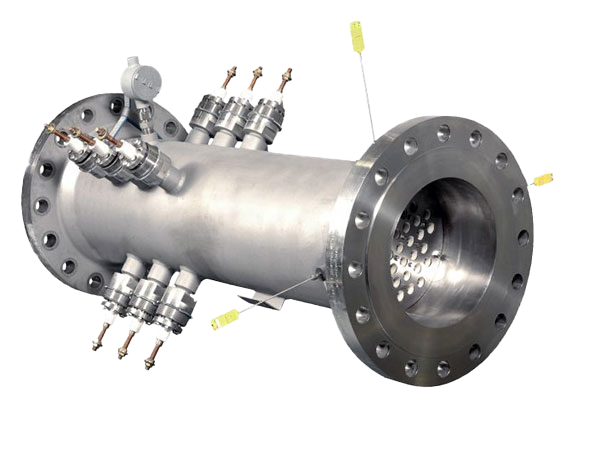
Over several decades, compact electrical flanged inline heaters from TUTCO SureHeat have demonstrated reliable performance in high-temperature, high-pressure combustion research environments. Their ability to achieve rapid, controlled temperature ramp rates—while maintaining operational safety and long service life—has made them a widely adopted solution in research facilities worldwide. The development and deployment of these advanced heater systems typically involve close collaboration between heater manufacturers and research institutions, from initial concept through system integration and long-term operation.
Electrification vs. Gas Heating in Test Facilities
The transition toward electrification is reshaping combustion research facilities. While gas-fired heating systems have historically been used to generate high-temperature airflow, they introduce limitations that can compromise test accuracy and repeatability. Combustion byproducts, including water vapor and CO₂, can alter the composition of the test stream, making it more difficult to isolate and study specific fuel behaviors.
Electric heating systems eliminate these variables, delivering clean, precisely controlled heat without introducing contaminants into the airflow. This is particularly important in advanced combustion research, where even minor inconsistencies can affect flame dynamics, emissions measurements, and overall test validity. In addition, electric heaters offer significantly faster response times, allowing researchers to rapidly adjust temperature profiles and simulate transient operating conditions.
From a practical standpoint, electrification also aligns with broader industry efforts to reduce emissions and improve energy efficiency. As research facilities increasingly adopt renewable power sources, electric heating becomes not only a more precise solution, but also a more sustainable one. The result is a shift toward fully electrified test environments that support both high-performance experimentation and long-term environmental goals.
Real-World Applications of Combustion Research
The insights gained through combustion research extend far beyond the laboratory, directly influencing the development of next-generation propulsion and energy systems across multiple industries. By enabling engineers to study fuel behavior, flame dynamics, emissions formation, and thermal performance under tightly controlled conditions, combustion research provides the foundation for innovation in both existing and emerging technologies. These controlled environments make it possible to replicate real-world operating scenarios—often at extreme temperatures and pressures—without the cost and complexity of full-scale systems. As industries face increasing pressure to improve efficiency, reduce emissions, and transition to alternative fuels, the role of combustion research has become even more critical.
Power Generation and Gas Turbines
Combustion research is equally important in the development and optimization of gas turbines used in power generation. Utilities and energy providers depend on efficient, reliable turbine operation to meet growing electricity demands while reducing emissions. Ongoing research supports improvements in combustion stability, thermal efficiency, and fuel flexibility—particularly as hydrogen blending and low-carbon fuel strategies become more prevalent. High-temperature testing allows engineers to evaluate how turbines respond to different fuel compositions and operating conditions, ensuring consistent performance while minimizing maintenance requirements and extending equipment life.
Industrial Combustion Systems and Process Heating
Beyond transportation and energy, combustion research supports a wide range of industrial applications where controlled heat is essential to production processes. Industries such as chemical processing, refining, and materials manufacturing rely on combustion systems for high-temperature operations. Research in this area focuses on improving thermal efficiency, reducing emissions, and transitioning from traditional fossil fuels to cleaner alternatives. Electric heating solutions are increasingly being integrated into these systems, enabling more precise control and supporting broader electrification initiatives across industrial operations.
Aerospace Propulsion Systems
In the aerospace industry, combustion research plays a critical role in advancing turbofan and turbojet engine performance. Engineers rely on high-fidelity testing to refine combustor geometries, optimize fuel-air mixing, and reduce emissions such as NOx and particulate matter. As aircraft manufacturers pursue greater fuel efficiency and lower environmental impact, combustion testing enables the validation of new designs under realistic operating conditions. This is especially important as sustainable aviation fuels (SAF) and hydrogen-based propulsion concepts are introduced, requiring precise control over temperature, pressure, and flow characteristics to ensure safe and efficient operation at altitude and across varying flight regimes.
Automotive and Heavy-Duty Transportation
In the automotive and heavy-duty transportation sectors, combustion research continues to drive improvements in engine efficiency and emissions reduction. While electrification is gaining momentum, internal combustion engines remain essential in many applications, including long-haul trucking, construction equipment, and off-road vehicles. Research efforts focus on optimizing combustion processes, improving fuel injection strategies, and integrating alternative fuels to reduce environmental impact. Controlled testing environments allow engineers to simulate real-world operating conditions, helping manufacturers develop engines that meet regulatory standards while maintaining performance and durability.
Emerging Energy Systems and Alternative Fuel Technologies
As the global energy landscape evolves, combustion research is playing a key role in the development of emerging technologies such as hydrogen combustion systems, fuel cells, and hybrid energy solutions. These applications require a deep understanding of how new fuels behave under extreme conditions, including high temperatures and pressures. Experimental validation is essential to ensure system performance, safety, and scalability. Advanced electric heating systems provide the controlled environments needed to explore these next-generation energy solutions, helping accelerate the transition toward cleaner, more sustainable energy infrastructure.
Get Started on Heating Solutions for Your Combustion Research Application
Share information on your application and learn how TUTCO SureHeats’s precision heating solutions can optimize your operations.
Contact our engineering team today to design a custom thermal solution built for reliability, efficiency, and performance.
 Electric Trim Heating
 Specialty Flanged Inline Heaters
 Specialty Heaters Development Process
 Aerospace Valve and Component Testing